City Center is the spine of modern Tel Aviv — the streets the city actually runs on.
Dizengoff Square, Kikar Rabin, the Habima axis, the Ibn Gabirol corridor: this is where Tel Avivis live their daily lives — between Lev Ha'ir's history to the south and Old North's quiet to the north. Below: every City Center transaction from the past 12 months, pulled live from the Israeli Tax Authority and translated into English.
Get the full Tel Aviv report —
delivered to your inbox.
We'll email you a personalized PDF of all transactions matching your filter, plus monthly market updates curated by The Tel Avivi team.
Your report is on its way.
Check your inbox in the next few minutes. Reply directly to that email if you'd like a personalized analysis from our team.
Why buyers choose City Center
Mercaz Ha'ir — City Center — is the broad central spine of Tel Aviv, where most of the city's daily commerce, civic life, and cultural calendar actually happen. It's the band between the historic Lev Ha'ir to the south and the residential Old North to the north: Dizengoff Square, the Habima cultural complex, Kikar Rabin, and the Ibn Gabirol corridor. More buildings, more inventory, and more variety than any other central neighborhood.
The most balanced central location
Equidistant from the beach, the Old North parks, Rothschild, and the start-up cluster around Sarona — City Center is the part of central Tel Aviv that works equally well for residents, professionals, and families. Nothing is more than fifteen minutes away on foot.
Real depth of inventory
Unlike Neve Tzedek or the Kerem, City Center has thousands of apartments at every size and price point: restored Bauhaus, 1960s mid-rise, modern towers, and a growing wave of new-build infills. If you have a specific brief, City Center is the only neighborhood likely to have multiple matching options at any time.
Dizengoff Square & Kikar Rabin
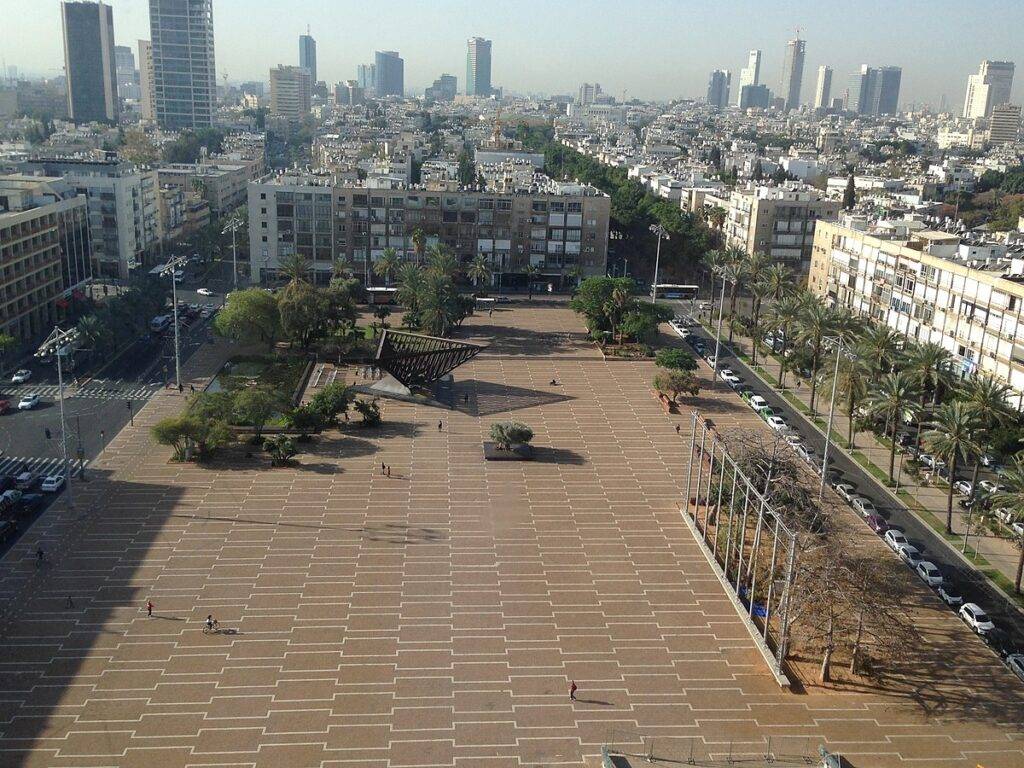
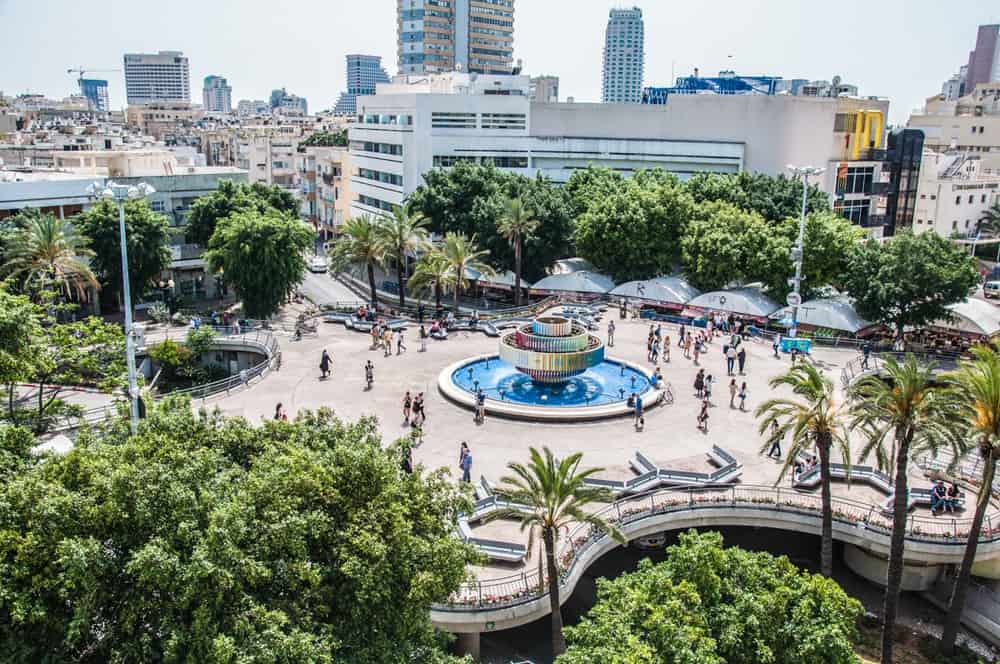
Two of Tel Aviv's defining public spaces sit inside the neighborhood. Dizengoff — the city's social heart — and Rabin Square, the civic and political one. The cafés, restaurants, and culture around each draw foot traffic from the entire metro area.
The Ibn Gabirol corridor
Tel Aviv's main north-south spine for restaurants, retail, and modern apartment buildings. Buyers who want a fully serviced street — supermarkets, pharmacies, cafés, dry cleaners — within thirty seconds of their front door come to the blocks fronting Ibn Gabirol.
Cultural anchors at scale
The Habima National Theatre, the Tel Aviv Performing Arts Center, the Cameri Theatre, the Tel Aviv Museum of Art, the Charles Bronfman Auditorium — Israel's cultural infrastructure is concentrated in City Center to an extent no other neighborhood comes close to.
Strong, stable rentals
Demand never softens. Diplomats, expats, students, and young professionals all converge here for the central location and the building variety, which keeps vacancy minimal and rental yields predictable. Less upside than Florentine, more stability than anywhere.
Where City Center begins and ends
City Center is the broad band between Tel Aviv's two more clearly named centers. It runs roughly from Arlozorov / Nordau in the north (the border with Old North), down to Bograshov / King George in the south (the transition into Lev Ha'ir), with HaYarkon Street / the beach to the west and the Ayalon Highway corridor to the east. The neighborhood polygon on this site's interactive map shows the exact boundary.
Inside it, the character shifts noticeably from west to east. The western strip near HaYarkon is beach-adjacent, with older Bauhaus stock and high short-term rental demand. The Dizengoff–Ibn Gabirol axis through the middle is the commercial heart — café streets, retail, residential mid-rises. The eastern edge near Ayalon and Sarona is more modern, taller, and closer to the central business district, with newer construction commanding a premium for proximity to the start-up cluster.
Sub-areas worth knowing: around Dizengoff Square (the most-trafficked, café-dense core), around Kikar Rabin (civic, leafier, slightly quieter), and around Habima (cultural anchor, transition zone into Lev Ha'ir).
What things cost
Prices below are computed live from the transactions in the widget above — past 12 months of registered sales in City Center.
A 2-bedroom in a renovated 1960s building on a side street typically transacts ₪4–5.5M. Newer-build apartments with elevator, parking, and balcony reach ₪7M. Penthouses with sea views or unique terraces push past ₪10M. The east side near Sarona and the new towers around the Da Vinci/HaShalom axis trade in their own bracket, with new construction routinely above ₪8M for a 3-bedroom.
A short history
City Center emerged in the 1930s and 40s as Tel Aviv expanded north from its original founding core. The grid Patrick Geddes designed in 1925 — wide tree-lined avenues, Bauhaus mid-rises, public squares at regular intervals — found its fullest expression in this band. Dizengoff Square (originally Zina Dizengoff Square, named after the city's first mayor's wife) opened in 1934 as the architectural showpiece of the new modernist city. The Bauhaus boom that defined the White City was at its densest here.
The neighborhood added layers through every subsequent decade. The 1960s brought mid-rise residential towers along Ibn Gabirol. The 1990s and 2000s brought the cultural institutions — Habima's renovation, the Tel Aviv Museum's expansion, the Performing Arts Center. The 2010s and 2020s have brought the eastern transformation: the Sarona complex, the towers along Da Vinci, and the new Red Line light rail running through the neighborhood's east side.
The result is the most architecturally diverse neighborhood in central Tel Aviv. You can buy an original 1930s Bauhaus apartment, a renovated 1960s unit, or a brand-new tower apartment — all within a five-minute walk of each other, all legitimately "City Center."
If City Center isn't quite right, consider
Lev Ha'ir
Directly south, the historic Rothschild/Bauhaus core. Smaller buildings, more character, slightly lower entry prices for renovation projects, and a more touristed feel. The "old Tel Aviv" version of City Center.
Old North
Directly north, beyond Arlozorov. Family-oriented, leafier, with bigger apartments and stronger family demand. Less day-to-day buzz, more quiet residential streets. A natural upgrade for City Center residents starting families.
Neve Tzedek
A few minutes south-west, low-rise, village-scale, and the city's most expensive per meter. Where City Center buyers go when they want a historic standalone home rather than an apartment in a building.
Looking for breadth, not character? City Center has the most options.
The Tel Avivi team helps buyers compare across all of City Center's eras — Bauhaus to brand-new — and find the right trade-off between size, price, building quality, and street. If you've narrowed it down to a few blocks, we'll tell you which buildings actually deliver what their listings promise.
City Center, answered
What exactly counts as City Center?
City Center (Mercaz Ha'ir) is the band between Old North and Lev Ha'ir — roughly from Arlozorov / Nordau (north) down to Bograshov / King George (south), with HaYarkon Street to the west and the Ayalon corridor to the east. It includes Dizengoff Square, Kikar Rabin, the Habima cultural complex, and the Ibn Gabirol corridor. The transactions widget above uses these boundaries via our neighborhood polygon classifier.
What's the difference between City Center and Lev Ha'ir?
They're adjacent and both central, but architecturally and historically distinct. Lev Ha'ir is the older Rothschild/Bauhaus core to the south — smaller buildings, more touristed, more historic feel. City Center is the broader, newer-built band to the north — bigger inventory, more mid-rises, the main cafés and civic squares. Most "I want to live in central Tel Aviv" buyers end up looking at both.
How expensive is City Center?
Median sale prices over the past 12 months sit around ₪4.8M for a 2-bedroom, at roughly ₪66,000 per square meter. Renovated 1960s side-street apartments transact ₪4–5.5M; newer buildings with parking, elevator, and balcony reach ₪7M; sea-view and Sarona-adjacent units push past ₪10M.
Is City Center good for families?
It can be. The apartments are larger than in Lev Ha'ir, Neve Tzedek, or the Kerem, and there are well-rated schools and kindergartens across the neighborhood — Dubnow, Dizengoff, and others. Families wanting more space and parks usually prefer Old North or Bavli, but City Center is the most family-viable of the central neighborhoods.
What about walking to the beach?
The western edge (HaYarkon Street) is the beachfront. From most City Center addresses, the Mediterranean is 5–12 minutes on foot. The Yarkon Park (the city's main green space) is a similar walk to the north.
What's the rental yield?
Gross yields typically run 3.5–4.5%, with older mid-rise buildings on the higher end and new towers on the lower (capital values are higher). City Center has the most stable rental demand of any Tel Aviv neighborhood — there is never a vacancy problem on a well-priced unit here.