Old North Tel Aviv —
Real Estate Guide & Live Transactions
Bauhaus apartments, leafy boulevards, and the quietest streets in central Tel Aviv. Below: every recent Old North sale registered with the Israel Tax Authority, in English, with real prices.
Every Old North sale, last 12 months
The transactions below come directly from the Israel Tax Authority registry. We translate the addresses into English, geocode them, and refresh monthly. Filter by size, price, or property type — or search a specific address.
Get the full Tel Aviv report —
delivered to your inbox.
We'll email you a personalized PDF of all transactions matching your filter, plus monthly market updates curated by The Tel Avivi team.
Your report is on its way.
Check your inbox in the next few minutes. Reply directly to that email if you'd like a personalized analysis from our team.
Why buyers choose Old North
Old North draws established families, returning diaspora, and the small group of Israelis who can choose anywhere in the city and pick this. The streets are quiet enough to raise children on. The buildings are tall enough to give the better units real light and air. The cafés on Basel Street and the Tel Aviv Port are five minutes away on foot — but they don't spill into your living room at 1 AM.
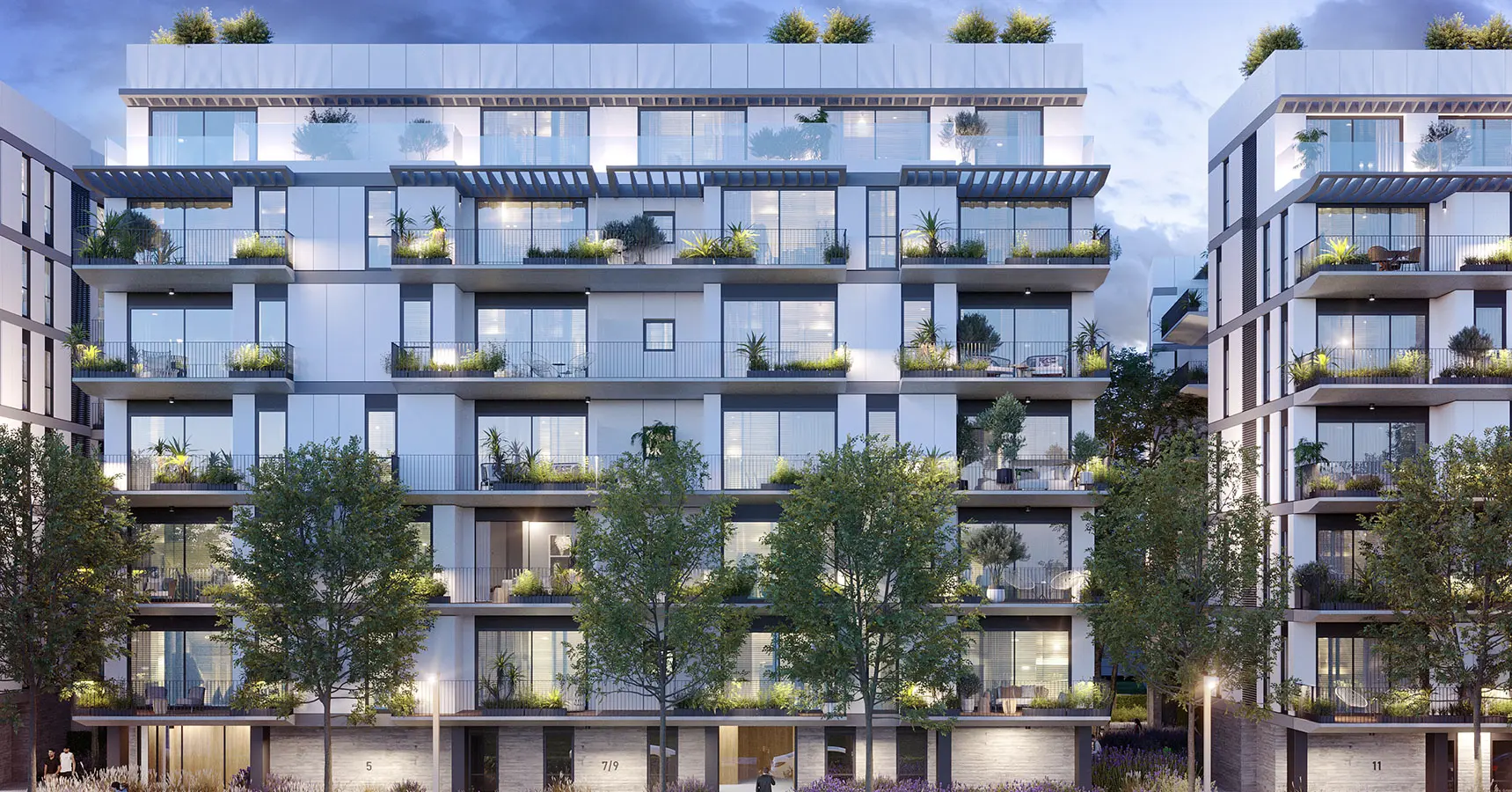
Many of Tel Aviv's senior doctors live here — Ichilov Hospital sits at the southern edge, on the corner of Weizmann and Dafna. Several embassies are on Sokolov and Pinkas, which tells you something about the kind of neighbor you'll have. The municipality has spent fifteen years quietly upgrading the streetscape: widened sidewalks, restored Bauhaus facades, the Basel Compound pedestrianisation, the rehabilitation of the Tel Aviv Port. The cumulative effect is a neighborhood that feels considered.
If Lev Ha'ir is Tel Aviv's living room, Old North is its bedroom. The buyer profile reflects that — most Old North transactions are second-home or upgrade-from-Lev-Ha'ir purchases, not first-apartment buyers.
Boundaries & sub-areas
Old North is the rectangle bounded by the Yarkon Park, Arlozorov Street, the sea, and Ibn Gabirol. Within it, four sub-areas behave differently from each other on price and character.
- North
- Yarkon Park & Yarkon River
- South
- Arlozorov Street
- West
- Mediterranean Sea / HaYarkon Street
- East
- Ibn Gabirol Street (border with New North)
- Sub-areas
- Basel Compound · Nordau Boulevard · The Port area · The Park-facing strip (Sokolov / Pinkas / Jabotinsky)
Basel Compound
The pedestrianised stretch around Basel Street and Bonei Ha'ir Square is Tel Aviv's most polished café district outside Neve Tzedek. Smaller buildings, slightly higher per-square-meter prices, and the highest concentration of design boutiques and bakeries in the neighborhood.
Nordau Boulevard & the residential grid
The boulevard itself is a continuous strip of Bauhaus apartments under mature ficus trees — Tel Aviv's most photographed residential street. The side streets running off it (Frug, Mapu, Sderot Ben Gurion) are quieter, denser, and contain most of the original 1930s building stock.
The Port area
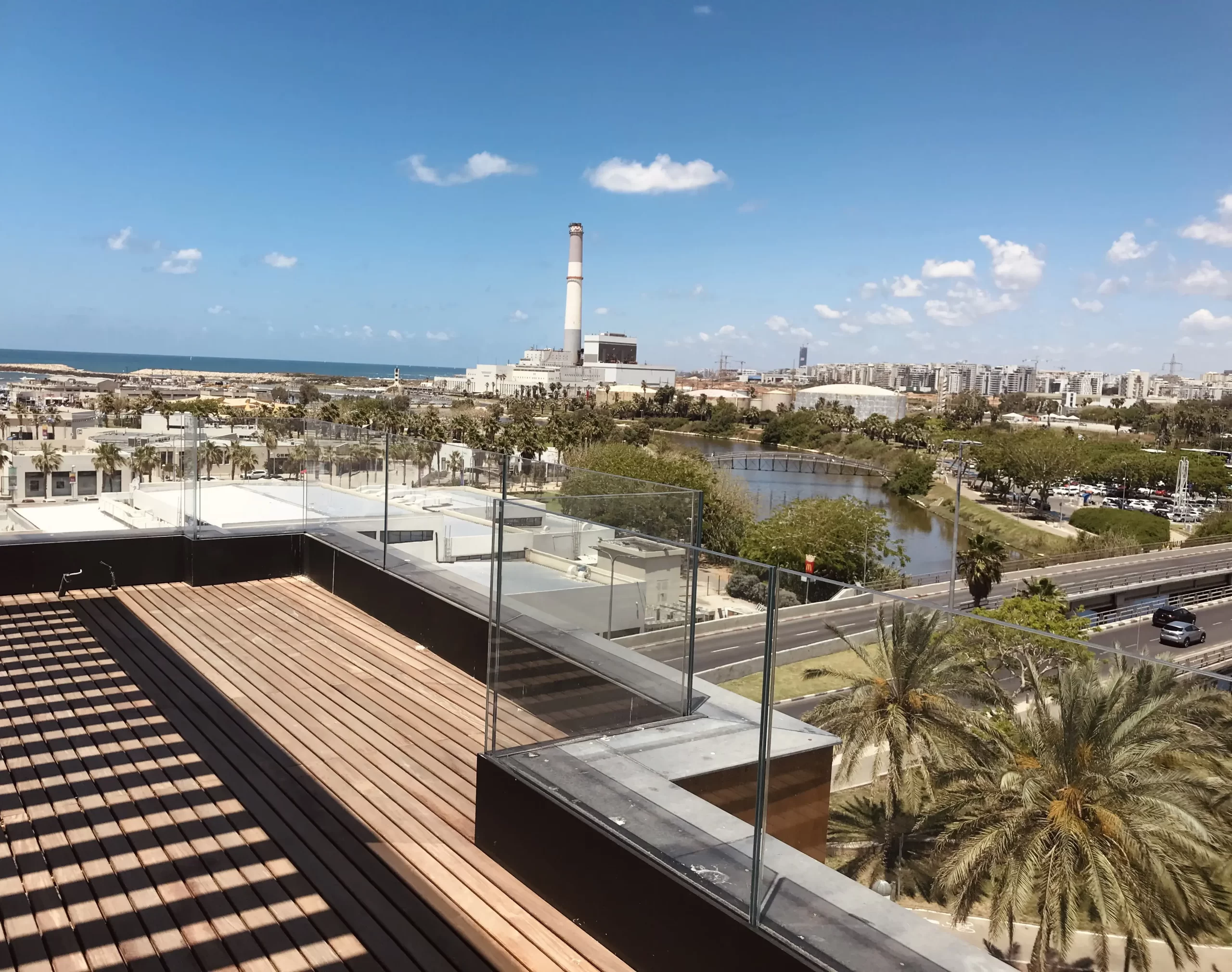
The northern strip near the Tel Aviv Port — once industrial, now a boardwalk, market, and weekend destination — has become its own micro-neighborhood. Newer construction, taller buildings, more diverse buyer profile.
The Park-facing strip
The streets immediately south of the Yarkon Park — Sokolov, Pinkas, Jabotinsky — command the highest prices in Old North. Park views, direct access to running and cycling paths, and the lowest density on the eastern half of the neighborhood.
What you can buy here
Old North is dense and almost entirely apartments — true houses are exceedingly rare. The building stock is roughly 70% pre-1970 (Bauhaus or Bauhaus-adjacent) and 30% newer construction or TAMA-38 renewals. Indicative bands based on recent transactions:
These ranges move with the market. For current, verified prices on specific streets and sub-areas, use the transactions widget above — it pulls live from the Tax Authority registry.
The architecture: Bauhaus & the White City
Old North was Tel Aviv's first planned expansion, laid out in the Patrick Geddes urban plan of 1925 as the city outgrew its original Jaffa boundary. The buildings that went up during the 1930s and '40s — flat roofs, horizontal ribbon windows, curved corner balconies, white stucco facades, thermometer-stair towers — were designed largely by European-trained architects who had fled Germany. They brought International Style modernism with them. The result is the densest concentration of Bauhaus architecture in the world.
UNESCO recognised this in 2003 when it designated the White City of Tel Aviv a World Heritage Site. Old North is the northern half of that designation; Lev Ha'ir is the southern half. Walk down Nordau Boulevard, or any side street off Frug and Mapu, and you'll see exactly what UNESCO was protecting.
This matters practically as well as aesthetically. World Heritage protection means many Old North facades cannot be substantially altered, which constrains supply and supports prices. It also means renovation work on heritage buildings runs through additional municipal permissions — slower, more expensive, but with the upside that the neighborhood will look largely the same in fifty years as it does today.
Old North vs. other Tel Aviv neighborhoods
If Old North is on your shortlist, these are the three substitutes most buyers weigh against it. Each makes a slightly different trade.
Lev Ha'ir
Rothschild Boulevard, the boulevard cafés, the centre of Tel Aviv's commercial energy. Higher prices per square meter, younger crowd, more nightlife. Pick Lev Ha'ir if you want to live in the city. Pick Old North if you want to live next to it.
Explore Lev Ha'irNew North
Across Ibn Gabirol. Built after 1948 — wider streets, newer modernist buildings, more luxury new-build inventory around Kikar HaMedina. Less of the protected Bauhaus character. Comparable prices.
Explore New NorthRamat Aviv & Bavli
More space per shekel, more parking, more suburban feel. You trade twenty minutes off every commute and the walkability that defines Old North. Often the choice for families who want a house feel without leaving Tel Aviv.
Explore BavliConsidering Old North? Let's talk.
We've closed deals across every price bracket in Old North — Bauhaus apartments needing renovation, TAMA-38 new-builds, park-view penthouses. The most useful thing we can do is show you the comparables you can't see in the public widget: recent off-market sales, our notes on which buildings have functioning vad bayit, what's pending. A first conversation costs nothing.
Frequently asked
What is the median price for an apartment in Old North?
Median prices run roughly ₪60,000–₪75,000 per square meter depending on the building, street, and view. The transactions widget above shows the current month's specific median — it's refreshed from the Israel Tax Authority registry.
Is Old North a good real estate investment?
Old North has appreciated steadily because supply is constrained — no empty land, dense existing fabric, and UNESCO protections on many Bauhaus buildings. It's not the fastest-appreciating neighborhood in Tel Aviv but it's one of the most resilient in downturns. Rental yields are moderate (roughly 2.5–3.5% gross) but capital appreciation has historically compensated.
Are there new construction projects in Old North?
Yes — primarily TAMA-38 urban renewals, where developers add two or three floors to existing buildings in exchange for seismic upgrades, new lobbies, and elevators. Ground-up new construction is rare because there are essentially no empty plots left and World Heritage protections limit demolition.
What's the difference between Old North and New North?
Old North is the original 1930s–40s expansion of Tel Aviv, west of Ibn Gabirol Street, defined by Bauhaus and International Style architecture. New North refers to the area east of Ibn Gabirol, built after Israel's founding in 1948, with wider streets and newer modernist buildings. Old North has the protected UNESCO character; New North has more recent luxury inventory around Kikar HaMedina.
Can foreign buyers purchase property in Old North?
Yes. Foreign nationals can buy residential property in Israel with no special restrictions beyond standard requirements: an Israeli tax identification number, an Israeli real estate attorney, and in most cases an Israeli bank account for the closing. Foreign-buyer transactions are routine in Old North — particularly from the French, American, British, and South African Jewish communities.
What are the exact boundaries of Old North?
Old North runs from the Yarkon Park in the north to Arlozorov Street in the south, the Mediterranean Sea to the west, and Ibn Gabirol Street to the east. Major streets within: Nordau Boulevard, Sokolov, Basel, Pinkas, Frug, Mapu, and the northern stretches of Dizengoff and Ben Yehuda.
Is parking difficult in Old North?
Yes. The neighborhood was designed in the 1930s when private cars were rare, and most original buildings have no parking. Newer construction (post-1990 and TAMA-38 renewals) typically includes underground parking, which adds a premium of roughly ₪200,000–₪400,000 per dedicated spot at resale. Many residents rely on street parking with a Tel Aviv resident permit and accept that finding a spot near home is sometimes a five-minute exercise.
What's the rental market like in Old North?
Steady. Long-term rentals are dominated by professionals, embassy staff, and families. Short-term and vacation rentals exist but are more concentrated near the Port area and the Basel Compound. Gross rental yields run 2.5–3.5% — modest by Israeli standards, reflecting the fact that prices have outpaced rents over the past decade.