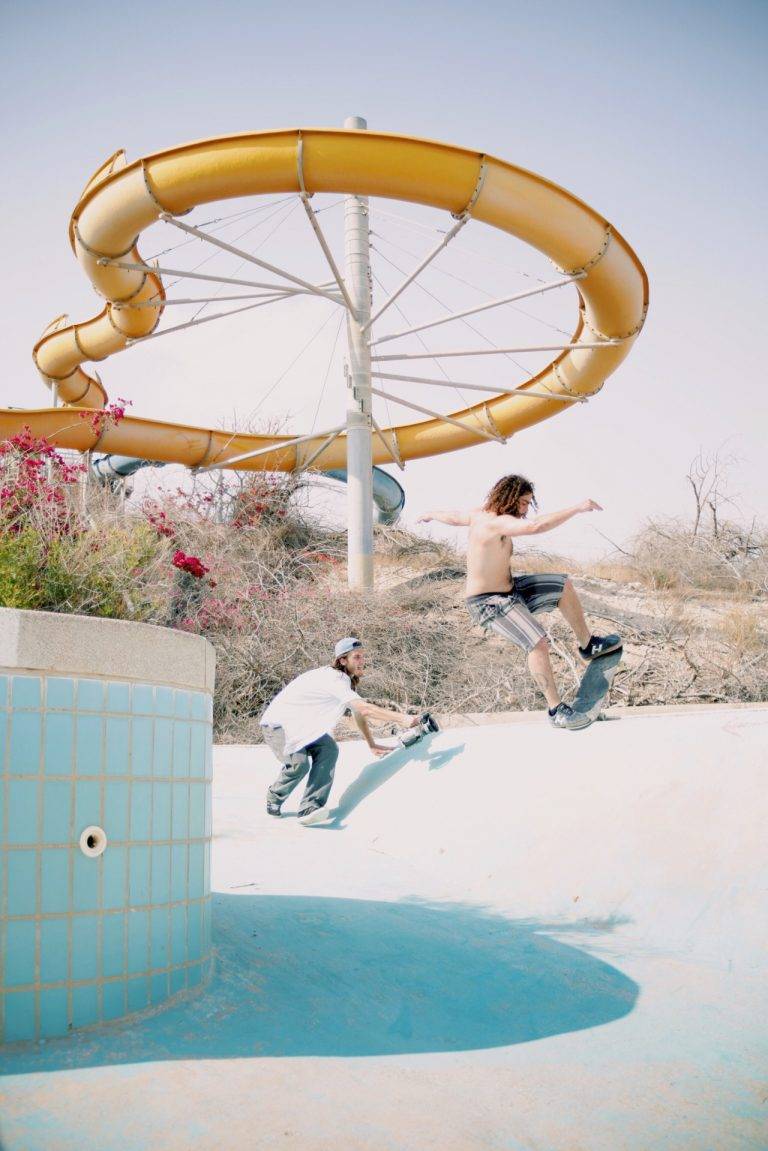
Florentine is Tel Aviv's workshop floor — and the city's loudest argument with its own future.
A 1920s working-class quarter that became a graffiti-soaked, bar-dense, gentrifying creative district. Old leather workshops and metal foundries sit next to natural wine bars and design studios. Below: every Florentine transaction from the past 12 months, pulled live from the Israeli Tax Authority and translated into English.
Get the full Tel Aviv report —
delivered to your inbox.
We'll email you a personalized PDF of all transactions matching your filter, plus monthly market updates curated by The Tel Avivi team.
Your report is on its way.
Check your inbox in the next few minutes. Reply directly to that email if you'd like a personalized analysis from our team.
Why buyers choose Florentine
Florentine is Tel Aviv's youngest, loudest, most contested neighborhood. Founded by Greek and Bulgarian Jewish immigrants in the 1920s as a tight-packed quarter of three-storey buildings and ground-floor workshops, it spent most of the 20th century as the city's industrial backyard. The last fifteen years rewrote it as Tel Aviv's creative engine — and the apartments still cost less than anywhere else inside the Ayalon.
The price gap is real
Per-meter prices in Florentine run 20–30% below comparable square footage in Lev Ha'ir or Neve Tzedek. For first-time buyers and investors, it's the only central-city neighborhood where ₪3M still buys a real 2-bedroom.
The nightlife capital
Vicky Cristina, Hoodna, Salon Berlin, Teder, Beit Kandinof — Florentine has the highest density of bars, listening rooms, and natural wine cellars in Tel Aviv. Friday nights here don't end at 2am.
Workshop ground floors
Decades of zoning quirks left the ground floors as commercial space and the upper floors as residential. The result: leather workshops, framers, screen printers, and one-room design studios on every block — and a streetscape that doesn't feel like anywhere else in Israel.
The light rail just landed
The Red Line stops at Salame and Mikve Israel — Florentine residents can reach Allenby in 4 minutes and the central business district in 12. Property values along the line moved up sharply in 2024 and are still adjusting.
Tama 38 in full swing
Florentin has more active Tama 38 (seismic-retrofit + rooftop addition) projects per square kilometer than any other Tel Aviv neighborhood. Two-bedroom buyers who can wait 18 months for delivery routinely pay 25% below market.
Walking distance to everything south
Eight minutes to Neve Tzedek. Ten to the Carmel Market. Twelve to the beach. Florentine sits at the city's southern hinge — close enough to the heart of Tel Aviv, far enough to keep its prices.
Where Florentine begins and ends
Florentine is bounded by Eilat Street in the north (the historical line between Florentine and Neve Tzedek), Salame Road in the south, HaAliya Street in the east, and Abarbanel on the west. Inside that grid, the neighborhood breaks roughly into three character zones:
The Florentin grid — between Florentin Street and HaTikva — is the visual cliché: graffiti-covered facades, three-storey courtyard buildings, the bars and design studios. Highest energy, highest noise, the lowest per-meter prices in the neighborhood.
The Vital quarter — around Vital, Abulafia, and Stern — is quieter, more residential, with restored buildings and fewer ground-floor workshops. Buyers looking for a Florentine address without the 2am soundtrack head here.
The Salame edge — directly above the new light rail — is where the construction cranes are densest. Three large mixed-use projects will deliver between 2026 and 2028, and the surrounding pre-existing stock has been bid up in anticipation.
What things cost
Prices below are computed live from the transactions in the widget above — past 12 months of registered sales in Florentine.
A standard 2-bedroom in pre-renovation condition transacts ₪2.5–3.2M. Renovated apartments in restored Tama-38 buildings reach ₪4.5M. Newly delivered duplexes and rooftop additions push past ₪6M. Ground-floor commercial spaces — the workshop-style units — trade as a separate category, typically ₪1.5–2.5M depending on street.
A short history
Florentine was founded in 1927 by David Florentin, a Sephardic Jewish merchant from Salonika who bought a strip of land south of Neve Tzedek and sold off plots to Jewish immigrants arriving from the Balkans. The first residents were Greek-speaking Jews from Thessaloniki, Bulgaria, and Turkey — tradespeople, leatherworkers, blacksmiths, and shoemakers. The neighborhood's tight three-storey buildings, with workshops on the ground floor and tiny apartments above, were built to a specific economic model: live and work in the same building, walk to the port.
That model defined Florentine for sixty years. By the 1980s, much of the industry had moved to the suburbs and Florentine was, by Tel Aviv standards, derelict. Rents collapsed. The 1990s brought artists, then bar owners, then designers, then the first wave of investor renovations. By 2010 the neighborhood had become Israel's main answer to the "former-industrial-now-creative" archetype that played out in Williamsburg, Berlin's Kreuzberg, or East London.
The pace has only quickened since. The Red Line opened in 2023. Tama 38 projects multiplied. The 1920s building stock — once the cheapest housing in central Tel Aviv — is now actively traded at prices that the original Sephardic merchants would not recognize.
If Florentine isn't quite right, consider
Neve Tzedek
Directly north of Florentine, with restored 1880s low-rise homes, narrow streets, and boutique-only retail. The original Florentine residents moved out of Neve Tzedek when it got expensive — and it still costs roughly 40% more per meter.
Lev Ha'ir
Twenty minutes' walk north, with the UNESCO-listed White City Bauhaus stock, the cultural institutions, and the central business district. Roughly 30% higher per-meter, but more rental-stable for buy-to-let investors.
Kerem HaTeimanim
The Yemenite Quarter, sandwiched between the beach and Carmel Market. Smaller streets, lower buildings, and a tighter community feel than Florentine. Limited inventory; prices vary widely block by block.
Eyeing a Tama 38 project? Read it twice.
Florentine has the highest concentration of Tama 38 development in Tel Aviv — and the widest gap between honest projects and ones that won't deliver. The Tel Avivi team has tracked every active Florentine renovation since 2019. If you've seen a listing, we'll tell you which developer is behind it, what's likely to actually arrive on the delivery date, and what the comps look like in real units.
Florentine, answered
What exactly counts as Florentine?
The municipally-defined Florentine is bounded by Eilat Street (north), Salame Road (south), HaAliya Street (east), and Abarbanel (west). The transactions widget above uses these exact boundaries via our neighborhood polygon classifier.
How expensive are Florentine apartments?
Median sale prices over the past 12 months sit around ₪2.9M for a 2-bedroom — the lowest of any central Tel Aviv neighborhood. Per-meter prices average ₪48,000. Restored apartments in Tama 38 buildings command 20–35% premiums; newly delivered duplexes push past ₪6M. Ground-floor workshop spaces trade as a separate category at ₪1.5–2.5M.
Is Florentine safe at night?
Yes. Tel Aviv overall has very low violent crime rates by international standards, and Florentine's high bar density means the streets are populated until 4am most weekends. The main quality-of-life consideration isn't safety — it's noise. Apartments above bars or facing pedestrian-heavy streets see meaningful Thursday-to-Saturday sound carry.
Is Florentine good for families?
Increasingly, yes — though it's not the conventional choice. The Vital quarter (west side of the neighborhood, away from the bar density) has multiple well-rated kindergartens and a primary school, and the Florentine Square playground is one of the better ones in the area. Most families still prefer Old North or Bavli for the parks and the quieter streets, but Florentine has become a viable option for families who want the urban texture.
What's a Tama 38 project and why does it matter here?
Tama 38 is an Israeli zoning incentive that allows developers to seismically retrofit older buildings in exchange for adding floors (and reselling those new apartments). Florentine's 1920s building stock is the prime candidate: dense, low-rise, and structurally outdated. The neighborhood has the most active Tama 38 sites per square kilometer in Tel Aviv, which means significant construction noise, real upside on pre-completion buys, and meaningful execution risk on smaller developers. We track them individually.
What's the rental yield?
Gross yields in Florentine typically run 4.5–5.5% — the highest in central Tel Aviv, driven by the lower entry prices and the strong demand from young renters. Restored units in Tama 38 buildings command higher rents but yield closer to 4%. Ground-floor commercial spaces (workshops, studios) yield somewhat higher but have higher vacancy risk.