Israel’s Housing Market Is Cracking Open. Should You Walk In?
The CBS just released its 2025 annual report. Here’s what the numbers actually say — and what they mean for your dollars.
Israel’s Central Bureau of Statistics published its annual real estate transaction summary on February 12, and the picture it paints is unambiguous: the housing market cooled significantly in 2025. Total dwelling sales fell 11.9% year-over-year. New apartment sales collapsed 25.5%. And for the first time in years, a genuine inventory surplus is building up — with 86,090 unsold new units sitting on the market at year-end, representing 29.2 months of supply at the current absorption rate. For USD-based investors, these numbers deserve serious attention — not panic, and not euphoria — but the kind of cold-eyed attention that separates good entries from bad ones.
The Numbers at a Glance
Let those last two numbers sink in. Nearly 29 months of unsold inventory is a level that fundamentally alters the power dynamic between buyers and developers. In a “normal” Israeli market, 12–18 months of supply is considered balanced. We are now well above that threshold, and the inventory trend line has been climbing since April 2022.
What Happened in 2025
The year breaks into two distinct stories. The first half carried momentum from 2024’s post-war rebound (remember, 2024 saw a 44% surge in total transactions compared to the war-disrupted 2023). But from mid-year onward, the market decelerated sharply. The Q4 data tells the story of where things stand right now: 21,710 units sold, down 14.7% versus Q4 2024 and, after seasonal adjustment, down 9.2%.
New apartments were hit hardest. The 25.5% annual drop in new home sales reflects a convergence of factors: mortgage rates that climbed to the 5%+ range, the Bank of Israel’s crackdown on aggressive 10-90 and 20-80 developer financing schemes in March 2025, and a general wait-and-see attitude among buyers who correctly sensed that prices were softening.
Second-hand apartments were more resilient, declining just 1.0% year-over-year. Existing homeowners have less urgency to sell, and the secondary market benefits from a more rational pricing mechanism — sellers adjust asking prices gradually rather than absorbing developer-scale inventory risk.
The Price Picture: Eight Consecutive Monthly Declines
The CBS Housing Price Index recorded eight straight months of price declines through October 2025, with a cumulative drop of roughly 2.7% from the February peak. On an annual basis, prices were essentially flat — up just 0.1% — after peaking at 7.8% annual growth earlier in the year.
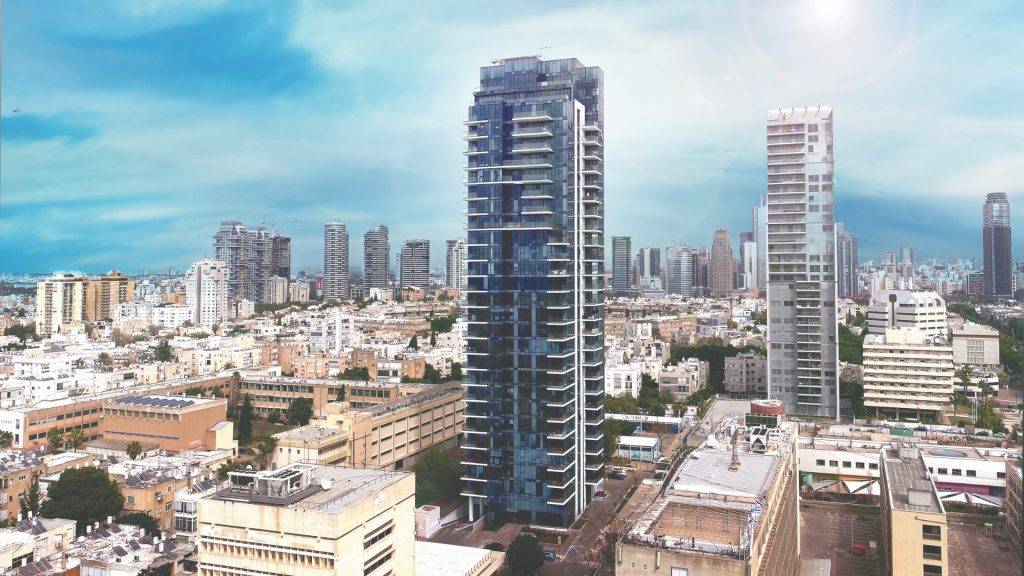
Tel Aviv has been the epicenter of the correction. Average apartment prices in the city fell 13% year-over-year by Q3 2025, and the large 4.5-5 room segment saw a striking 26% decline from Q1 to Q3 levels. At an average of NIS 3.68 million (~$1.19M at current rates), Tel Aviv remains extraordinarily expensive — but it is no longer as untouchable as it was 12 months ago.
The Dollar Advantage
Here is where the analysis gets particularly interesting for foreign buyers. The Israeli shekel has strengthened dramatically — roughly 13% against the dollar over the past 12 months. As of mid-February 2026, the USD/ILS rate sits around 3.07–3.09, compared to approximately 3.55–3.60 a year ago.
This is a double-edged sword. On one hand, your dollars buy fewer shekels today than they did a year ago. A $1 million budget that converted to NIS 3.55M in February 2025 now converts to roughly NIS 3.08M — a 13% loss in purchasing power before you even look at property prices. On the other hand, local prices are declining, partially offsetting the currency headwind. Net-net, the shekel appreciation has likely cost USD buyers more than the price declines have given back.
| Metric | Feb 2025 | Feb 2026 | Change |
|---|---|---|---|
| USD/ILS Rate | ~3.55 | ~3.08 | −13.2% |
| Avg. Apartment Price (NIS) | ~2.36M | ~2.21M | −6.4% |
| Avg. Apartment Price (USD) | ~$665K | ~$718K | +8.0% |
| Tel Aviv Avg. (NIS) | ~4.37M | ~3.68M | −15.8% |
| Tel Aviv Avg. (USD) | ~$1.23M | ~$1.19M | −3.2% |
The takeaway: if you are buying nationally at average prices, you are actually paying more in dollar terms despite local price declines — the strong shekel has eaten your discount. However, in Tel Aviv specifically, where NIS-denominated prices have dropped sharply enough, USD buyers are seeing a modest net benefit of roughly 3%.
If you believe the shekel will continue strengthening (and the Bank of Israel’s own forecast projects further rate cuts to 3.5% by Q4 2026, which could support continued appreciation), then waiting may cost you even more in currency terms. If you believe the shekel is overextended — and some forecasters project a return toward 2.70–2.80 by late 2027 — then patience on the currency front could be rewarded.
Where the Deals Are (and Aren’t)
Tel Aviv Correcting
New apartment sales in Tel Aviv fell 27.9% in 2025 versus 2024. The city still had 9,710 unsold new units at year-end — the second-highest inventory in the country behind Jerusalem (10,230). The large-apartment segment is under acute pressure. For USD buyers targeting Tel Aviv, this is the best negotiating environment in years, particularly in the luxury and large-apartment segment where developers are increasingly motivated. But don’t expect fire sales: the NIS 3M+ price floor for even modest apartments remains firmly intact.
Jerusalem Mixed
Jerusalem is the outlier. New apartment sales plunged 38.6% year-over-year — the sharpest drop of any district — yet second-hand prices actually rose 9.3% in Q3. The city has the country’s highest unsold inventory (10,230 units), suggesting new construction is significantly overbuilt relative to absorption capacity. The secondary market remains tight due to Jerusalem’s unique demand profile (religious communities, limited land within municipal boundaries). Approach new construction with heavy skepticism; the secondary market still commands premiums.
Haifa Relative Value
Haifa offered the second-most second-hand transactions (3,632 units) of any city. Prices remain a fraction of Tel Aviv’s — roughly 40% lower on a per-square-meter basis. Government infrastructure investment (light rail, high-speed rail) provides a genuine long-term catalyst. For yield-oriented buyers, Haifa’s rental returns exceed Tel Aviv’s. The risk is that Haifa’s economy is more cyclical and less anchored by the tech sector.
Peripheral Cities Opportunity + Risk
Cities like Ofakim, Lod, and Nof HaGalil posted enormous year-over-year gains in 2025 new home sales (driven off low 2023 bases due to war disruption). These markets are driven primarily by government-subsidized housing programs — 29.9% of all new apartments sold nationwide in 2025 were subsidized. The subsidies create artificial demand; when they taper, these markets are vulnerable. Invest only if you understand the specific program mechanics and exit timelines.
The Macro Setup
The Bank of Israel cut rates twice in quick succession — to 4.25% in November 2025 and to 4.0% in January 2026. Its research department projects rates reaching 3.5% by Q4 2026. GDP is forecast to grow 5.2% in 2026 (up from 2.8% in 2025), supported by the Hamas ceasefire and normalizing economic activity. Inflation has moderated to 2.4%, comfortably within the 1-3% target range.
Lower rates should, in theory, boost housing demand by reducing monthly mortgage payments. But analysts at Phoenix and Globes have cautioned that the pace of rate cuts may be insufficient to meaningfully revive demand given the starting point of affordability stress. Average monthly mortgage repayments increased by over NIS 1,000 during the high-rate period, and mortgage arrears hit record levels exceeding NIS 4 billion. This overhang won’t clear overnight.
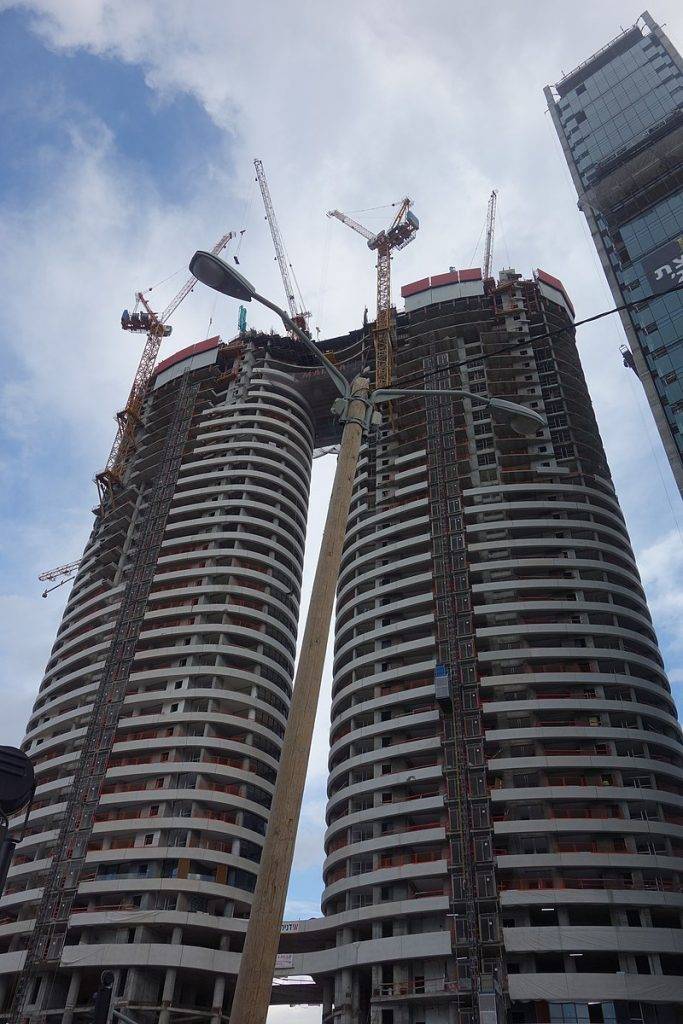
Meanwhile, on the supply side, construction starts surged 31.5% in the year through September 2025 to approximately 81,000 units — one of the strongest figures on record. This new supply will hit the market over the next 2-3 years, adding to the already record inventory. Phoenix’s chief economist has stated that a cumulative price decline of 6-8% over the coming year is plausible.
The Verdict: Should You Buy?
The case for buying now: You are entering the most buyer-friendly market Israel has seen since 2019. Developers are motivated, inventory is at record levels, and prices are softening. In Tel Aviv specifically, the NIS-denominated correction has been meaningful enough that even after the shekel’s appreciation, USD buyers are getting modestly better value. Rate cuts will eventually re-stimulate demand, and when they do, the market will tighten quickly — Israel’s structural housing shortage (population growth of ~1.8% annually vs. limited buildable land) has not gone away. If you have a 5-7 year horizon and find the right property at the right price, the timing is reasonable.
The case for waiting: The correction is likely not over. Eight months of price declines, record unsold inventory, and 81,000 new units entering the pipeline suggest further price erosion through at least mid-2026. The shekel’s rapid appreciation has already eroded much of your dollar advantage, and if the currency continues strengthening (as BoI projections imply), every month you wait costs you in conversion terms — but that loss may be offset by deeper local price cuts. Mortgage arrears are at record levels, which could force distressed sellers into the secondary market later this year.
The honest assessment: This is not the moment to rush in, nor is it the moment to sit on the sidelines indefinitely. The optimal strategy for a USD-based investor is to identify target properties now, negotiate aggressively (particularly with developers sitting on large unsold inventories), and be willing to close in H2 2026 when the rate-cutting cycle is more mature and price discovery has further progressed. Avoid subsidized-market properties unless you deeply understand the program. Avoid new construction in Jerusalem at current inventory levels. If you must buy now, Tel Aviv’s secondary market and Haifa offer the best risk-adjusted profiles. Hedge your currency exposure if you’re deploying significant capital — the shekel-dollar dynamic is the single biggest variable in your return equation.
Key Risk Factors
Geopolitical risk remains the perennial wildcard. The Hamas ceasefire is holding but fragile; the Bank of Israel’s entire macro forecast is conditioned on its continuation. A resumption of hostilities would freeze the market again — which paradoxically could delay the price correction but also delay any eventual recovery.
Fiscal risk is underappreciated. Israel’s budget deficit reached 4.8% of GDP in 2025, and public debt is at ~68.5%. The 2026 budget targets 3.9% — achievable but not guaranteed. Any fiscal slippage could spook bond markets and reverse the rate-cutting cycle.
Regulatory risk cuts both ways. The March 2025 crackdown on aggressive developer financing was a demand killer; future regulatory changes (purchase taxes for foreign buyers, capital controls) are always possible in Israel’s politically dynamic environment.
Rental yields remain poor at ~3.4% nationally. This is not a cash-flow market. Your return thesis must be capital appreciation or personal use — not income generation.
Disclaimer: This analysis is for informational purposes only and does not constitute investment, financial, or legal advice. Real estate transactions in Israel involve complex legal, tax, and regulatory considerations. Consult qualified professionals before making any investment decisions. Past performance is not indicative of future results. Currency exchange rates are subject to significant volatility.